Lady Gregory. Have you ever heard of? If you are an Irish Theatrist, or a Korean theatrist, you may know about her.
She is a playwright, producer, and a patron, at the dawn of Irish theatre. She supported various Irish playwrights to make them go famous. She built the first National Theatre in Dublin, for Irish people, when Ireland was still under British Empire’s control. She herself wrote many plays to attract the Irish common audience, when theatre was an aristocratic pleasure.
She has been rather long forgotten or hidden behind big Irish names such as WB Yeats, but nowadays, possibly because of BREXIT and recent gender-equal movements, more light is put on her.
I am directing (rehearsing) some her best short plays in Japan. The Workhouse Ward, and The Rising of The Moon.
The actors are great and understand the background situation of Ireland and Britain at the turn of the 20th century.
If you are interested in watching the streaming (in Japanese), contact me.
Do you know Jean Giraudoux, a French playwright of early 20th Century? I will be in one of his plays called La Guerre de Troie N’aura Pas Lieu: The Trojan War will Never Take Place. The play is known and made into many stage productions in English as Tiger At The Gates, translated by Stephen Fry.
It is about the very day when the war is outbroken.
As Troy has just won a big war in Asian continent, Hector the General really wanted to rest, and came back only to find that his younger brother Paris has abducted the most beautiful Helen of Sparta into Troy, and the whole Greek army is on the way to win her back.
I am going to play Hecube (Hecabe in English), a 50 years old queen and mother of 19 children from Priam the King.
Giraudoux wrote female gathering scenes in which Hecabe was as a warm yet hilarious vigorous one, I think. She does her best to avoid another war, by wit and humour, while all “male characters who have never been at war because of their physical frailty” are eager to go into another war only because they don’t want Helen to leave.
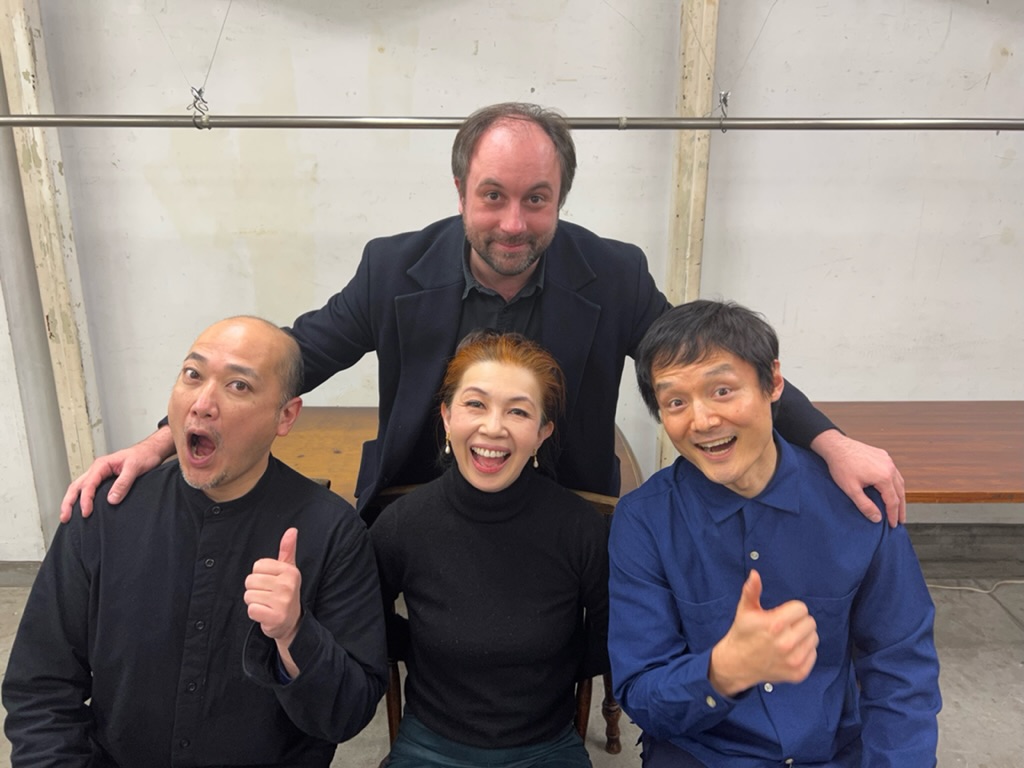
The director and producer of the production has his theatre company, and is quite experimental and wants this one as a physical and musical performance with mixed genres. Thus among the cast, there are a Kyogen (traditional Japanese) performer, a mask performer from Jacques Lecoq, a film director, a ballet dancer, etc. There are also several young novice or student actors in the theatre company members.
The rehearsal is more like nonstop exercise-workshop, and quite in confusion. But we believe this will make some special one, for the positive energy we put in is enormous!
I will put more photos from the rehearsal. Wait for it!
Thank you all for the lovely birthday messages for me through SNS. I love you all and you are my treasure! These days I ponder the reason why I live as I am. What can I do as a theatre director-actor? Why the God(s) gave me this occupation to achieve what? I always think about those questions.
2. Online Workshop for international Japanese actors.
I am going to hold onilne workshop for Japanese actors who wish to work with English language. If you are interested in learning Japanese, maybe it is a nice workshop to join. I will use The Happy Prince by Oscar Wilde. Anyone interested, contact me.
3. I Left No Ring With Her.
Viola’s Ring Speech, Twelfth Night, Shakespeare.
“I left no ring with her, what means this lady?” in English!
I also started working on a project The Seagull by Anton Chekhov, with a Russian director. On 5th February, he held an open rehearsal of a scene. It is my honour to be casted as Arkadina!! So exciting!
This open rehearsal will be broadcasted later. I will let you know.
Under COVID-19 restriction, my year 2021 was not so bad, thanks to your support, love and understanding. I did many performances both online and on the spot, both live and recorded. I did many teachings for universities as usual (though many of them online, still better than in 2020). I led many workshops and lessons for actors, singers, ballet dancers, and Japanese language learners. My books (translation of IMPRO by Keith Johnstone, and my own writing Acting And Directing Of Shakespeare, and British Style Acting) are selling well. My singing is getting better and now I am enjoying singing rather than feeling tortured. I also have re-started horse back riding and song making. Here I put my creative works of the year.
January
17, Online Live Performance: Luther Recital: acting
31, Shakespeare Workshop: Enjoy the sounds of words
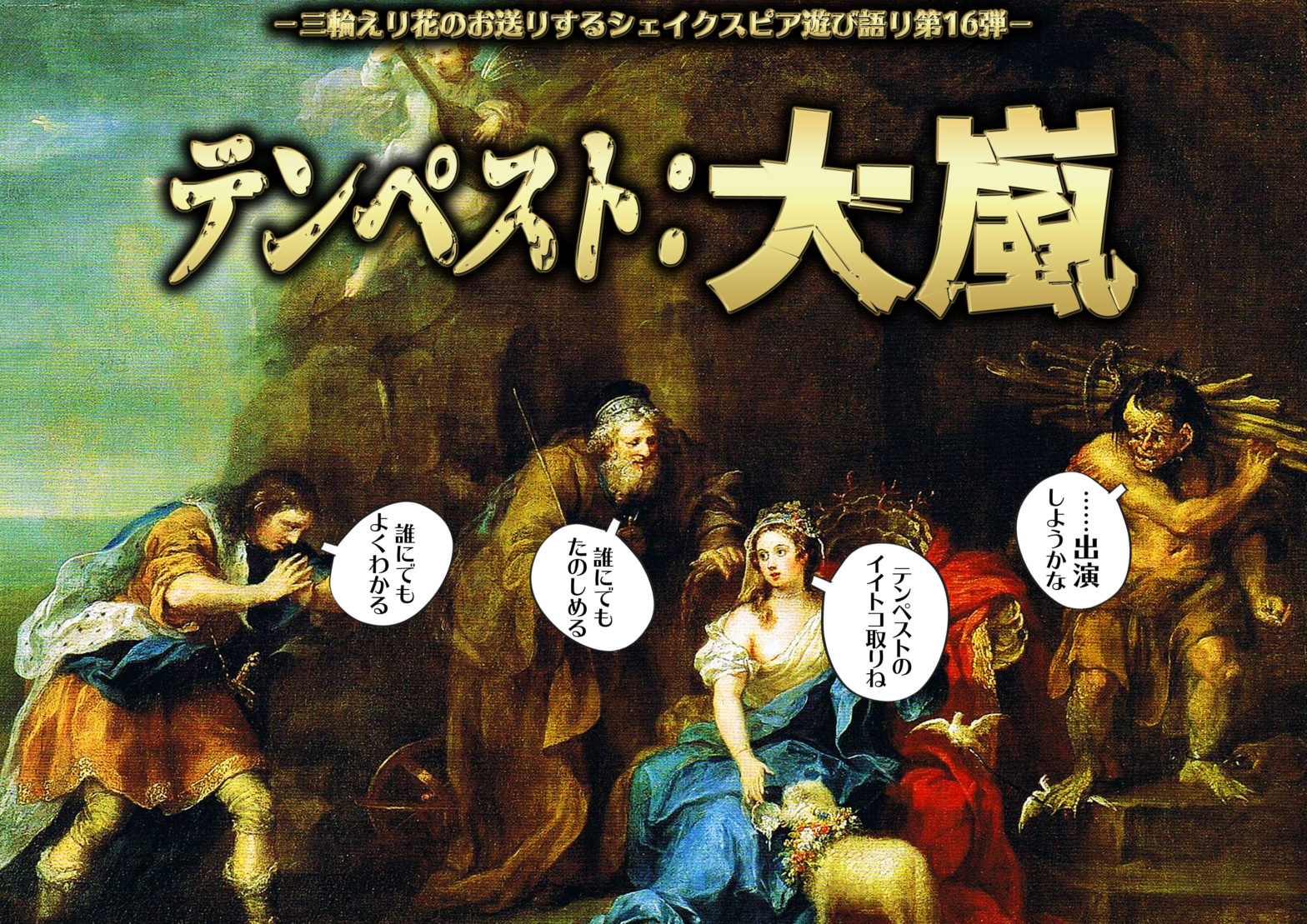
February 21, Online Live Performance: So What’s So Great About The Tempest?: produce, script, direct, act
28, Filmed event of Ballet TED: Acting for Ballet Dancers: speaker
March 4 & 7, Filmed online performance: The Tempest: produce, translate, direct
30 & 31, Live Performance: The Tempest: produce, translate, direct, act (Ariel), navigate. This show is comvined with the filmed scenes and live performance and is distributed as a movie.
April 8, Online Seminar by International Theatre Institute (UNESCO): Theatre in Conflict Zones from the Japanese Centre: produce, speak, translate
Augst 1, Online Live Performance: Luther Recital: sung Dorabella’s duet with Gugliermo
22, Online Live Performance: Edwin: produce, direct
29-Sep 2, Visit Miwa Shrine for gratitude and support
September 17-19, Stage Performance: Now With the Future of Theatreby Dea Loher: direct, act
October 2, Stage Performance: Luther Recital: sung Dorabella’s duet with Gugliermo and act Prince Hul of Henry IV
16, Online Shakespeare Workshop: facilitate, lead
December 5, Ballet Acting Workshop: facilitate, lead
19, Ballet Theatre Symposium: speak
23, Online Live Performance: Christmas Impro & The Gift of Magis: produce, direct, act
28 & 29, Online Live Impro Workshop for Japanese Language Acquisition: facilitate, lead
Hello, friends, globalians, and countrypeople, lend me your ears.
Here is something I can offer you the English speakers at last!
Are you a some kind of a Shakespeare fan? But sometimes you feel there’s much more to know if you want to fully enjoy the plays?
Then, this is what you really enjoy.
The Tempest the movie.
Done by only 7 actors and 3 dancers.
You enjoy wonderful actors’ performance, great movie effects, and know tips that give you more knowledge to help you understand the play, and thus, more enjoyment!
Everything was done by zoom, and yet the acting is really great, incredibly interacted. You will be surprised.
In between the scenes, I myself appear as the narrator like a movie subtitle narrations, (and as Ariel).
Why did I make this?
Well: Every Summer, I produce How To Enjoy Shakespeare Series. Last year (2020) I was planning to do The Tempest. As we all know that was impossible because of COVID-19.
So I totally changed the plan and decided to make it absolutely online.
The purpose of this project is to let the Japanese people know how to enjoy the usually-thought-to-be-difficult-to-understand Shakespeare, by showing the scenes and giving the key points and great phrases.
Our culture now is quite far away from the Shakespearean common sense and daily routines.
It is not only for the Japanese people, but also for the very English people, too. When I was living in England, I saw many members of the audience from young to elderly, in the auditorium or in the foyer of the theatre, murmuring, “So that character is doing what?” or “And who is connected to who?” and “I didn’t quite get the meaning of the word, what was that?”.
In my project, How To Enjoy Shakespeare, gives such as:
the map of the places which appear in the play and the meaning of it,
the map of the characters in the play and their love-hate-family relations,
the key words of the play, the meaning of marriage in Renaissance time, and
the other features of which the modern audience who don’t read books as much as the generations before and don’t quite get the meanings.
This project have attracted so many Japanese people in the last 10 years.
And I’ve always been wanting to let the world enjoy this project. But it was done on stage in Tokyo and was impossible if one did not live in the area.
However, finally, because of this unfortunate situations which forced me to make this into movie project, it comes to my mind, “how about put English subtitles on?”
The piece I put it as a play was originally a speech Ms Loher wrote for the opening ceremony of a theatre festival held in Berlin in October, 2020. Yes, it was when the European world just came out of 6 months of strict and tragical lockdown.
When I first read the text, what came up to my mind how to direct it as a play was that I was to put it as kind of TED speech to present an academic research, using alide shows, and the speaker-character as a doctor.
But as I kept reading it, different ideas appeared.
A goddess of theatre, who couldn’t reach us because the theatres were closed. The goddess found a box filled with secret scrolls. And she starts to talk to the audience.
Well, I was not sure if my interpretation and direction was right, but I was sure that I chose an honest decision.
The performance on stage was distibuted live-online, and I heard Ms Dea Loher saw it and liked it. Thank youxxx
You can see the photos of my performance (I directed it and performed as the character, too) and may get some ideas.
Hi! I have been working on my new production of The Tempest. Yes, Shakespeare’s The Tempest.
It was supposed to be stage last June (2020). But, as the world is facing the pandemic, my stage-production was postponed to last March (2021). Then, as Tokyo situation became unstable and seemingly becoming worse, I decided to film the production, instead of putting onto stage against all odds.
And now, ladies and gentlemen and folks, hereby I announce the opening of The Tempest MOVIE!
The film, in Japanese, has been already selling worldwidely. And I am going to put English subtitle to it!
I will also provide English Website page, English web-visual, and a shopping cart in English. Wait for the moment!
I have just been a speaker at one of the series of a seminar called Theatre in Conflict Zones, organized by International Theatre Institute (ITI, UNESCO).
We, living in Japan or other comparatively peaceful nations, tend to forget there are many many countries and regions which are struggling in conflicts.
And what is happening there in arts? Are theatre alive? If so, what theatre has to do with the society and people’s life while they are struggling to eat and keep their lives on a thin thread?
Theatre in Conflict Zones is the project to dig into the reality of theatre there. It has been a great experience and had a lot of fun also, knowing the people in the world. You can watch the recorded Youtube Live-streaming .
↑ I will appear around 50 min. But the talk from UGANDA is also very interesting and important. Must watch!
ZEN-Acting Today
Just take your time to think about people in conflict zones.
How are you these days? We are still struggling hard to get on with COVID-19.
I hope you are well and energetically working for your own good.
Zen is useful to keep your mind calm.
With the calm zen mind, it is quite a useful period to resume your acting skill.
Today, I have a news on my book.
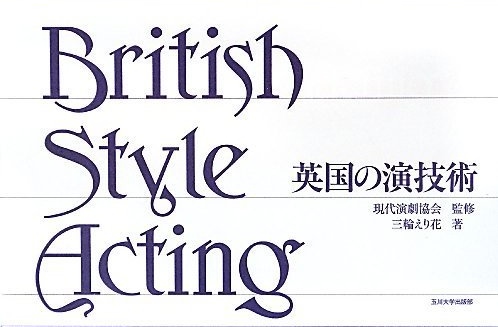
『英国の演技術』著 玉川大学出版部、第3版 中国語に翻訳され中国でも発売中
British Style Acting, written by myself in Japanese, and translated into Chinese, is a technical book for acting.
I have been a translator and student to the Royal Academy of Dramatic Art, UK, for more than twenty years. I put all the knowledge I learnt from them, from Physical necessity, Movement, Voice, Interaction, Stanislavski, to Shakespeare, into this book.
I put many illustrations as well so that the reader can work himself out alone with the book in his hand. (– I mean ‘he, him, his’ including ‘she, her’.)
The book has been published by Tamagawa University Press in 2012, and now this September, the fourth edition has been published.
If you are interested in, please go check amazon or Tamagawa University Press for clicking the photo.
Everyman (in Japanese, MinNa) is an allegorical morality play written by anonymous writer of the 10th Century.
I read it when I was an international student at University of Victoria, Canada, in 1986, and very much impressed.
At that time, I had no idea whatsoever that I was to be a theatre director. But in 2002, after I made myself in that occupation, I had a chance to put a show in a young and small theatre company. I chose this one without hesitation.
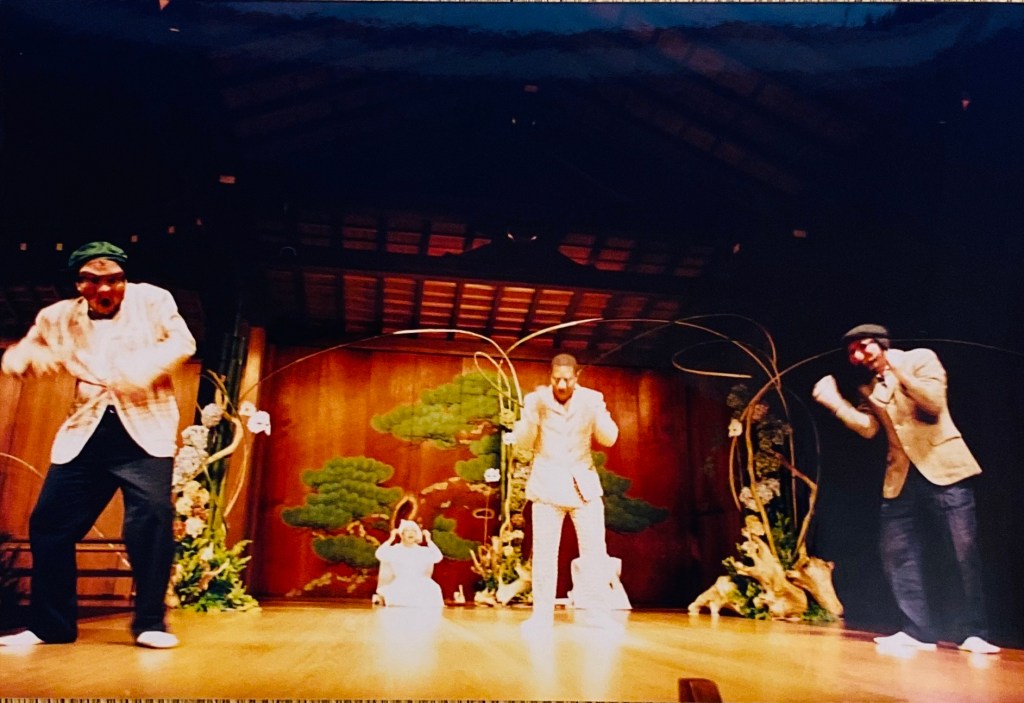
One of the significant points of this production was that we put it on a traditional Noh Theatre stage. It was so so so difficult to get permission from the Noh Family. It was such a new thing that a modern western-style theatre would use traditional Japanese theatre stage. We knew nobody, we were unknown by anybody.
Another significant point of the show was that the cast was mixed with varied nationalities. English, Cameroonian, Singaporean, and Japanese. I think ours was one of the earliest experiment to put a theatre piece in multi-lingual and multi-national.
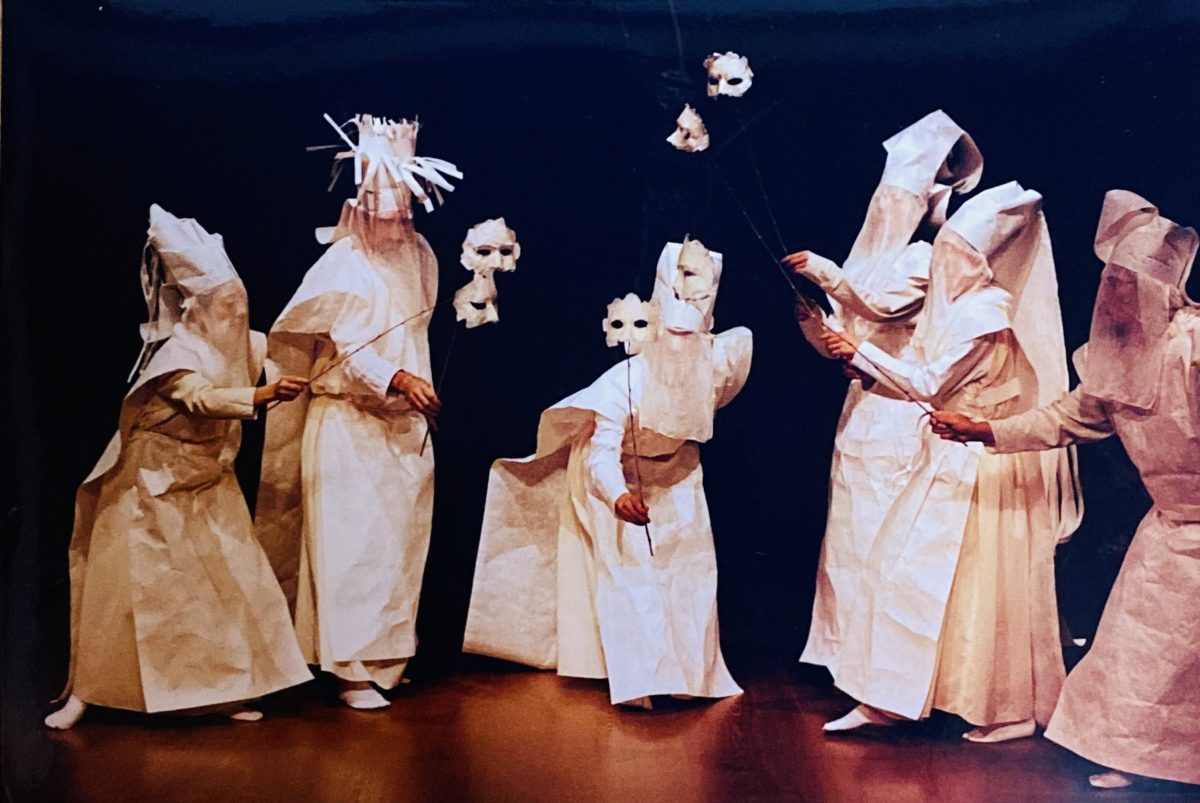
The Gods are gathering to discuss how to deal with people who do not show any respect to them. The masks are hung from bamboo rods, the face-cover, head-piece, and the white costumes are made of Japanese Washi paper.
Gods decided to eliminate people. A god summons Everyman (MinNa) and tell him that Death would fetch him today. The masks are hung on decorated tree in Traditional Noh Style. Those decoration trees are designed by KoEn Yokoi.
Everyman, so astonished, tries to find co-traveller to Hell. All his Friends (Tomo), his kinsmen (Shinrui Enja)rejected him, even though they said “I’ll do anything for you.” These modern clothes are normal clothes.
Disappointed by human beings, MinNa now tries to persuade Money (YutakaSa), but in vain. The gorgeous blue dress and head-set are made of Japanese Washi paper.
But there come Knowledge (Chishiki) and Good Deed (Yoi Okonai), and tell MinNa that if he should prepare with the robe of sorrow, Five Great Senses will be with him.
But then, great companions come to him. And they all start to go down to Hell, playing music and singing together.
Among them are Common Sense (Shiryo Funbetsu), Energy (Chikara), Beauty (Utsukushi), and other good simbols join him to the road to Hell.
At last, he came to the gate of Hell. The elements are astonished and cannot go further. They have lost their power.
But Good Deeds (Yoikoto) says she will be with him whatever happens and wherever he goes. Then Death descends and brings them away to the world of death.
How do you like it?
I love my directing. (If not, who would?) And, as I put the memories together after 18yearts from the production, I am proud of myself. The idea, the setting, the translation, and the new challenges. I thank the actors, though some of them I have lost my track, those talented and challenging, and exciting people!